At the opening reception for our Civil War exhibit, we were given a map from 1858 owned by Major General John Sedgwick. The map, produced by the War Department Office of Explorations and Surveys, is a sketch of the routes between Fort Laramie and the Great Salt Lake.
At the time, Sedgwick was stationed at Fort Leavenworth in Kansas. Fort Laramie was further west, in Wyoming. The Great Salt Lake area, even further west, was of great interest to the military: from 1857 to 1858, the U.S. army engaged in what they called the "Utah Expedition." It has also been called the Mormon War.
During the 1850s, the U.S. government considered the Mormons to be a lawless group of religion fanatics. In May, 1857, approximately 2,500 U.S. troops assembled at Fort Leavenworth and marched to Salt Lake to subdue the Mormons and reclaim control of the Utah territory. In response, the Mormons called up the Utah militia to defend them. Both sides spent months posturing, trying very hard to avoid actual combat.
The "bloodless war" continued until June, 1858, when Brigham Young accepted President Buchanan's offering of peace.
Sedgwick's map was made in January 1858, during the middle of the conflict between the U.S. military and the Mormon settlers.
Showing posts with label military. Show all posts
Friday, September 19, 2014
Monday, September 15, 2014
William and Newton Cogswell
William H. Cogswell (1837-1864) was a member of the Schaghticoke tribe and was Connecticut’s first Native American to enlist during the war. He originally attempted to enlist at Winsted when the first companies were being formed. After Cogswell enlisted and was sworn into service, his fellow soldiers demanded that he be kicked out, on the grounds that he was not white. Cogswell’s enlistment was canceled and his name was erased from the muster rolls.
On June 22, 1861, Cogswell once more tried to enlist, this time at Cornwall. Cogswell grew up in Cornwall, where he was well-known as the town’s fastest runner, easily winning any race held at local fairs. He had no difficulty joining a regiment at his hometown, enlisting as a Sergeant with Company I of the 5th Connecticut Volunteer Infantry. During a skirmish at Harrisburg on May 3, 1862, Cogswell was taken prisoner by the Confederates. He was paroled and discharged on May 21, 1862, returning home for two months.
On July 21, 1862, Cogswell enlisted with Company B of the 19th Infantry (later the 2nd Heavy Artillery). His younger brother, Newton W. Cogswell (1835-1876), joined him in Company B, enlisting on November 21, 1863. The brothers served side-by-side. When Newton was wounded in the arm at the Battle of Cold Harbor on June 1, 1864, William was there to comfort him.
William Cogswell was admired by his fellow soldiers and commanding officers for his endurance and his optimism, despite the racism he encountered when he first attempted to enlist at Winsted. He was promoted to Second Lieutenant on March 5, 1864.
On September 19, 1864, Cogswell was wounded in the leg at the Battle of Winchester. His leg was amputated, and he died from related complications on October 7, 1864. He was given a hero’s burial in the North Cornwall Cemetery.
William’s brother Newton survived the war physically, but appears to have suffered from PTSD. After his service ended, Newton returned to Cornwall and to his former life as a day laborer. He married Pauline M. Hoffman in 1867, and for a brief period things went well for him. But in 1875, Cogswell’s wife left him and applied for a divorce.
On December 30, 1875, Newton Cogswell snapped. He went to the Davidson home on Cream Hill, where his wife was staying, and shot at her five times, hitting her twice in the head. Cogswell fled the scene, and was found dead in a barn about a mile from his home in March, having killed himself with poison. His wife eventually recovered from her wounds. Newton was buried next to his brother William in the North Cornwall Cemetery.
![]() |
| William Cogswell (from T.S. Gold's History of Cornwall) |
On June 22, 1861, Cogswell once more tried to enlist, this time at Cornwall. Cogswell grew up in Cornwall, where he was well-known as the town’s fastest runner, easily winning any race held at local fairs. He had no difficulty joining a regiment at his hometown, enlisting as a Sergeant with Company I of the 5th Connecticut Volunteer Infantry. During a skirmish at Harrisburg on May 3, 1862, Cogswell was taken prisoner by the Confederates. He was paroled and discharged on May 21, 1862, returning home for two months.
![]() |
| Sheet music sent by William Cogswell in 1862 to his friend, Miner Rogers, in Cornwall. |
On July 21, 1862, Cogswell enlisted with Company B of the 19th Infantry (later the 2nd Heavy Artillery). His younger brother, Newton W. Cogswell (1835-1876), joined him in Company B, enlisting on November 21, 1863. The brothers served side-by-side. When Newton was wounded in the arm at the Battle of Cold Harbor on June 1, 1864, William was there to comfort him.
William Cogswell was admired by his fellow soldiers and commanding officers for his endurance and his optimism, despite the racism he encountered when he first attempted to enlist at Winsted. He was promoted to Second Lieutenant on March 5, 1864.
On September 19, 1864, Cogswell was wounded in the leg at the Battle of Winchester. His leg was amputated, and he died from related complications on October 7, 1864. He was given a hero’s burial in the North Cornwall Cemetery.
![]() |
| Cogswell obelisk, North Cornwall Cemetery. |
William’s brother Newton survived the war physically, but appears to have suffered from PTSD. After his service ended, Newton returned to Cornwall and to his former life as a day laborer. He married Pauline M. Hoffman in 1867, and for a brief period things went well for him. But in 1875, Cogswell’s wife left him and applied for a divorce.
On December 30, 1875, Newton Cogswell snapped. He went to the Davidson home on Cream Hill, where his wife was staying, and shot at her five times, hitting her twice in the head. Cogswell fled the scene, and was found dead in a barn about a mile from his home in March, having killed himself with poison. His wife eventually recovered from her wounds. Newton was buried next to his brother William in the North Cornwall Cemetery.
Monday, September 8, 2014
Sedgwick Walking Tour
Close to 90 people met up at the Sedgwick Memorial for a walking tour led by David A. Ward of Civil War Tours. As a surprise treat, members of Company F, 14th Connecticut Volunteer Infantry joined the tour. As pointed out by David Ward, their presence was particularly appropriate: the 14th Connecticut was the only Connecticut regiment to serve under Sedgwick during the Civil War.
Sedgwick's house in Cornwall Hollow burned down in 1859. Construction of a new house was overseen by his sister Emily, who received instructions from Sedgwick in his letters. By September, 1860, Sedgwick was longing to return home to Cornwall. On September 25, he wrote to Emily about some of his plans for the new house: "I mean to add to the library and a few pictures, as we have the means.... I still think, when we have paid up [our debts], we will furnish the parlor and library handsomely."
| The tour began at the Sedgwick Memorial. David Ward is addressing the group. |
| Heading up the hill to Sedgwick's birthplace. |
| Company F, 14th C.V.I. marching up the hill. |
| The end of the march--standing in between the house where Sedgwick was born, and the house he planned to retire to. |
| A glimpse of Sedgwick's longed-for retirement home. |
Sedgwick's house in Cornwall Hollow burned down in 1859. Construction of a new house was overseen by his sister Emily, who received instructions from Sedgwick in his letters. By September, 1860, Sedgwick was longing to return home to Cornwall. On September 25, he wrote to Emily about some of his plans for the new house: "I mean to add to the library and a few pictures, as we have the means.... I still think, when we have paid up [our debts], we will furnish the parlor and library handsomely."
| The march back down the hill, with hints of what the area looked like when Sedgwick lived here. |
| The final leg of the tour, in the Cornwall Hollow Cemetery. |
| Sedgwick's grave marker. |
| Company F, 14th Connecticut Volunteer Infantry. |
| Tour participants enjoying refreshments and conversation. |
Friday, August 22, 2014
Sedgwick Memorials and Grave
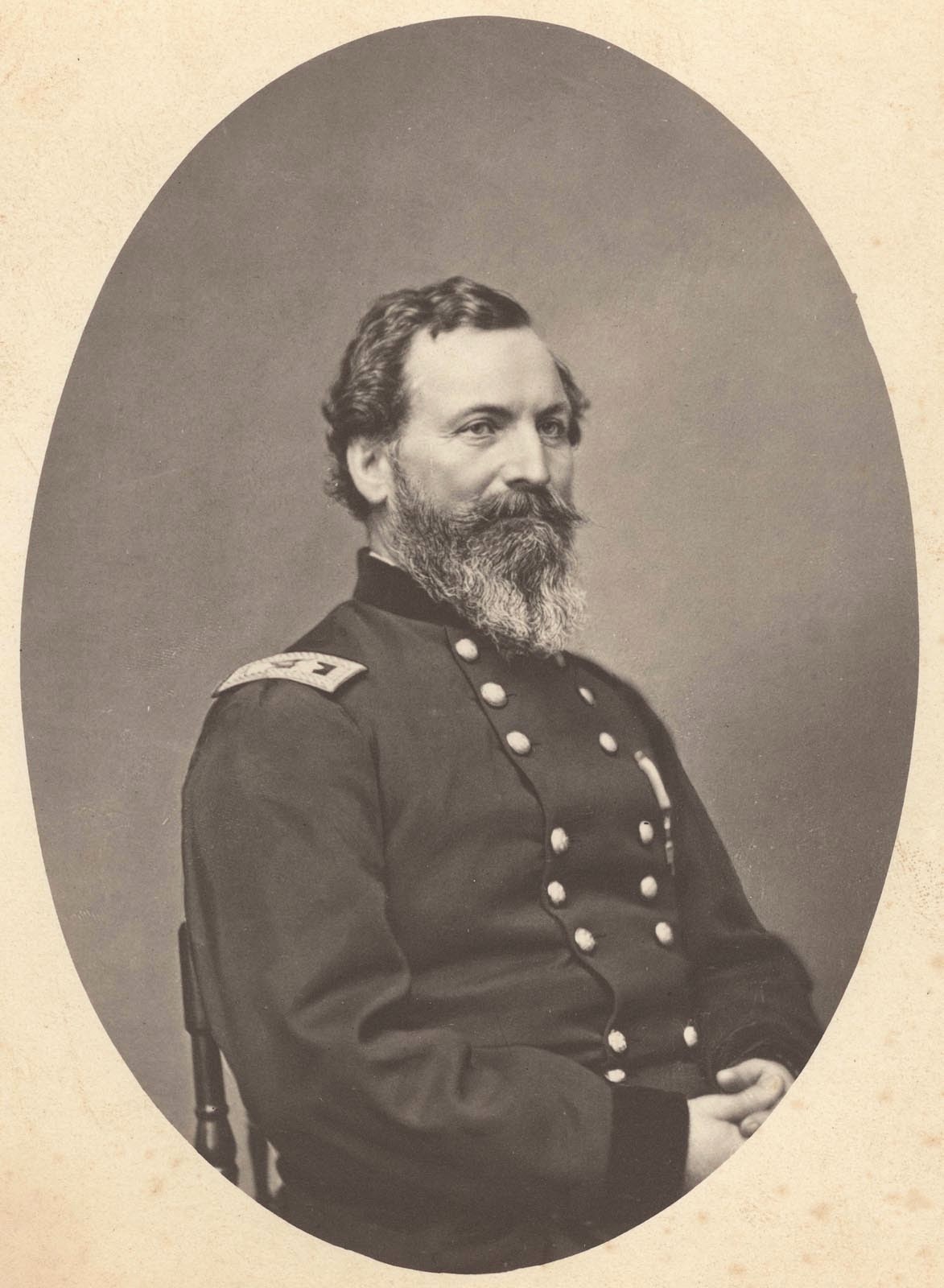
John Sedgwick (1813-1864) was Cornwall’s most illustrious soldier and one of the best-loved Union officers, referred to by his men as “Uncle John.” An 1837 graduate of the U.S. Military Academy at West Point, he spent his life rising through the ranks of the U.S. Army.
Sedgwick was killed at the Battle of Spotsylvania Courthouse on May 9, 1864. Seeking to encourage his men as he chastised them for ducking from the bullets of Confederate sharpshooters, Sedgwick declared “They couldn’t hit an elephant at this distance.” Moments later, a Confederate bullet struck Sedgwick in the face, killing him instantly. He was the highest ranking Union officer to be killed during the war.
Major General John Sedgwick was buried at Cornwall Hollow on May 15, 1864. Newspaper accounts estimated that about 3,000 people attended (the entire town’s population was less than 2,000). The family rejected the Connecticut General Assembly’s plan to have his remains lie in state in the Capitol at Hartford, and instead held a simple, modest ceremony at Cornwall Hollow.
On Memorial Day in 1892, veterans gathered at Sedgwick’s grave for a special commemoration. An estimated 2,000 people attended the service, which began with a parade to the Cornwall Hollow Cemetery from West Cornwall. Next, members of the VI Corps decorated Sedgwick’s grave, adding their emblem to his obelisk. The other soldiers’ graves in the cemetery were decorated next, followed by a luncheon under a massive tent, and afternoon speeches about Sedgwick.
Sedgwick’s death was so deeply felt that the officers and men who knew him continued to gather for commemorations for more than half a century. The first statue of Sedgwick was erected at his alma mater, the U.S. Military Academy at West Point, in 1868.
A monument to Sedgwick's memory was placed at Spotsylvania Courthouse by the members of the VI Corps in 1887.
The Sedgwick Memorial at Cornwall Hollow was dedicated on May 30, 1900. The ceremony was attended by an estimated 3,000 people. Cornwall’s residents helped pay for the monument, which was also funded by subscription from people throughout Connecticut. The monument includes a howitzer used by his command during the Mexican War.
The original cannonballs on the monument were destroyed during a World
War II scrap metal drive. In 1989, vandals stole three of the monument’s
bronze plaques and damaged a fourth. New plaques, based on photographs,
were made by Cornwall resident Neil Estern. The monument was restored
and rededicated in 1994. Honorary wreath bearers for the rededication
were Harriet Clark and Bessie Blake, who attended the original
dedication in 1900.
An equestrian statue of Sedgwick was erected by the State of Connecticut at Gettysburg in 1913. The horse was modeled after a photograph of “Handsome Joe,” Sedgwick’s horse, and the sword was a copy of the one he wore into battle (now in the collection of The Connecticut Historical Society).
Most recently, in 1929, a statue of Sedgwick was added to the Capitol building in Hartford.
Sedgwick was killed at the Battle of Spotsylvania Courthouse on May 9, 1864. Seeking to encourage his men as he chastised them for ducking from the bullets of Confederate sharpshooters, Sedgwick declared “They couldn’t hit an elephant at this distance.” Moments later, a Confederate bullet struck Sedgwick in the face, killing him instantly. He was the highest ranking Union officer to be killed during the war.
![]() |
| Civil War portrait of Major General Sedgwick. |
Major General John Sedgwick was buried at Cornwall Hollow on May 15, 1864. Newspaper accounts estimated that about 3,000 people attended (the entire town’s population was less than 2,000). The family rejected the Connecticut General Assembly’s plan to have his remains lie in state in the Capitol at Hartford, and instead held a simple, modest ceremony at Cornwall Hollow.
On the Sunday after he fell, borne by his neighbours, amid the tears of silent thousands, and wrapped in the flag, he was buried in Cornwall Hollow. No military salute was fired above his grave, but one solitary peal of distant thunder sublimely suggested the soldier’s life and death. Sedgwick died, but the victory was won.
~ George William Curtis, Oration delivered at the dedication of the statue to Major-General John Sedgwick, at West Point, October 21, 1868
On Memorial Day in 1892, veterans gathered at Sedgwick’s grave for a special commemoration. An estimated 2,000 people attended the service, which began with a parade to the Cornwall Hollow Cemetery from West Cornwall. Next, members of the VI Corps decorated Sedgwick’s grave, adding their emblem to his obelisk. The other soldiers’ graves in the cemetery were decorated next, followed by a luncheon under a massive tent, and afternoon speeches about Sedgwick.
![]() |
| Graveside service for Sedgwick, Cornwall Hollow Cemetery, 1892. |
Sedgwick’s death was so deeply felt that the officers and men who knew him continued to gather for commemorations for more than half a century. The first statue of Sedgwick was erected at his alma mater, the U.S. Military Academy at West Point, in 1868.
![]() |
| Sedgwick state at West Point in 2014. |
A monument to Sedgwick's memory was placed at Spotsylvania Courthouse by the members of the VI Corps in 1887.
![]() |
| Sedgwick Memorial erected by the VI Army Corps at Spotsylvania Courthouse, VA. |
The Sedgwick Memorial at Cornwall Hollow was dedicated on May 30, 1900. The ceremony was attended by an estimated 3,000 people. Cornwall’s residents helped pay for the monument, which was also funded by subscription from people throughout Connecticut. The monument includes a howitzer used by his command during the Mexican War.
![]() |
| Sedgwick Memorial, Route 43, Cornwall, CT. |
An equestrian statue of Sedgwick was erected by the State of Connecticut at Gettysburg in 1913. The horse was modeled after a photograph of “Handsome Joe,” Sedgwick’s horse, and the sword was a copy of the one he wore into battle (now in the collection of The Connecticut Historical Society).
![]() |
| Sedgwick equestrian statue at Gettysburg. |
Most recently, in 1929, a statue of Sedgwick was added to the Capitol building in Hartford.
![]() |
| Sedgwick statue on the Capitol building at Hartford, CT. |
Friday, July 11, 2014
Curator's Talk
Join us this Sunday, July 13, 2 p.m., at the Cornwall
Town Hall for a special lecture by Raechel Guest, Curator of our new
exhibit, Cornwall and the Civil War, and Executive Director of the
Cornwall Historical Society.
Ms. Guest will give an overview of Cornwall’s involvement in the Civil War and will highlight some of the surprising and little-known stories she discovered during her research for the exhibit. Her talk will be illustrated by slides of historic photographs and artifacts.
Refreshments will be served. There is no charge for the program, but donations are welcome.
Ms. Guest will give an overview of Cornwall’s involvement in the Civil War and will highlight some of the surprising and little-known stories she discovered during her research for the exhibit. Her talk will be illustrated by slides of historic photographs and artifacts.
![]() |
| William H. Cogswell, the first Native American in Connecticut to enlist during the Civil War. Collection of Cornwall Historical Society. |
Refreshments will be served. There is no charge for the program, but donations are welcome.
Sunday, June 22, 2014
Sedgwick's Statue at Hartford
Major General John Sedgwick (1813-1864), who grew up in Cornwall Hollow, has been called Connecticut's most illustrious Civil War soldier. The state commissioned an equestrian statue of Sedgwick at Gettysburg which was unveiled in 1913. A decade later, the state requisitioned funds for another Sedgwick statue, to be placed on the south facade of the Capitol building at Hartford.
Connecticut commissioned Berthold Nebel, a sculptor based in New York City, to create the statue for the Capitol. A plaster cast was positioned in the niche on the side of the building for final design approval in August, 1928. The final marble statue was installed in March, 1929 (as reported in the Hartford Courant).
Nebel's design shows a significant amount of artistic license: rather than being a literal depiction of how Sedgwick appeared in life, the artist chose to create a heroic interpretation of how he thought a Civil War General ought to look.
For comparison, take a look at this 1864 depiction of Sedgwick in a Johnson, Fry & Co. engraving based on a painting by Thomas Nast:
The 1864 engraving show Sedgwick as he typically appeared in photographs. The most obvious differences between this image and the statue at Hartford include the way Sedgwick wore his pants over his boots, the absence of gloves, the thickness of his coat (which seems cotton-thin on the statue), and the dishevelment of his hair and beard.
Connecticut commissioned Berthold Nebel, a sculptor based in New York City, to create the statue for the Capitol. A plaster cast was positioned in the niche on the side of the building for final design approval in August, 1928. The final marble statue was installed in March, 1929 (as reported in the Hartford Courant).
![]() |
| Sedgwick statue, south facade of the Capitol building, Hartford. |
Nebel's design shows a significant amount of artistic license: rather than being a literal depiction of how Sedgwick appeared in life, the artist chose to create a heroic interpretation of how he thought a Civil War General ought to look.
For comparison, take a look at this 1864 depiction of Sedgwick in a Johnson, Fry & Co. engraving based on a painting by Thomas Nast:
![]() |
| Major General John Sedgwick (detail), 1864. Collection of Cornwall Historical Society. |
The 1864 engraving show Sedgwick as he typically appeared in photographs. The most obvious differences between this image and the statue at Hartford include the way Sedgwick wore his pants over his boots, the absence of gloves, the thickness of his coat (which seems cotton-thin on the statue), and the dishevelment of his hair and beard.
Cornwall and the Civil War
Our 2014 exhibit, Cornwall and the Civil War,
opens on June 28. The exhibit will be open through October 26 on Saturdays, 10
a.m. to 4 p.m., and Sundays and holiday Mondays, 1 to 4 p.m.
The exhibit explores the impact of the Civil War on Cornwall’s residents, from the men who served in the military, to the women who organized fundraisers to help support the troops. Conflicts within the town are revealed by the exhibit—not everyone in Cornwall supported the war, and at least one person even tried, briefly, to fly the Confederate flag at the start of the war.
Cornwall’s best known soldier was Major General John Sedgwick, the highest ranking Union soldier to be killed during the Civil War. Many of Sedgwick’s personal and military memorabilia will be on view in the exhibit, including his uniform, tactical manuals, battlefield maps, calling cards, and a gold-tipped cane presented by Sedgwick to his cousin, Samuel W. Gold. An opulent, jeweled dress sword, presented to Sedgwick by the officers of the 2d Division, II Corps, will be paired with the field sword Sedgwick wore into battle. This is the first time in history that the two swords have been displayed together. The field sword is on loan from The Connecticut Historical Society in Hartford, where it has rested ever since it was donated to the State of Connecticut by Sedgwick’s sister after his death.
About 182 men from Cornwall, nearly ten percent of the town’s population, served during the Civil War. Fifty-two of those men died. Four of Cornwall’s soldiers were prisoners of war: only two survived. The stories of many of these soldiers are profiled in the exhibit, pairing photographs and other historic images with first-hand accounts of some of their experiences. Rare artifacts belonging to Cornwall’s Civil War soldiers will be on view; these include letters they wrote to family, tintype photographs they sent home as mementos, a pair of scissors and a thimble carried through the war by a Cornwall soldier, and a cane used by a veteran whose wartime injuries left him with a limp. Also included is a fragment of a wood beam salvaged from a flour mill destroyed by Union troops during General Sheridan’s Shenandoah Valley Campaign in October 1864; the burned beam was sent back to Cornwall as tangible evidence of the war’s devastation.
A particularly poignant letter included in the exhibit was sent by Quarter Master Sergeant Joseph B. Payne, killed at the Battle of Cold Harbor on June 1, 1864, to his sister Charlotte in Cornwall. Payne arranged to have the letter sent in the event of his death and wrote “Do not be at your wits end wondering who this comes from, but receive it as the words of your now Sainted brother Joseph. From one who loves thee with thoughts too dear to tell, let us recognize each other in heaven.”
The exhibit has been generously funded by Connecticut Humanities, Mohawk Mountain Ski Area, National Iron Bank, and Torrington Savings Bank.
The Cornwall Historical Society is located at 7 Pine Street in Cornwall, CT. The exhibit runs from June 28 through October 26, 2014 and will be open Saturdays, 10 a.m. to 4 p.m., and Sundays, 1 p.m. to 4 p.m. Admission is free, although donations are welcome. For more information, visit www.CornwallHistoricalSociety.org or call (860) 672-0505.
The exhibit explores the impact of the Civil War on Cornwall’s residents, from the men who served in the military, to the women who organized fundraisers to help support the troops. Conflicts within the town are revealed by the exhibit—not everyone in Cornwall supported the war, and at least one person even tried, briefly, to fly the Confederate flag at the start of the war.
Cornwall’s best known soldier was Major General John Sedgwick, the highest ranking Union soldier to be killed during the Civil War. Many of Sedgwick’s personal and military memorabilia will be on view in the exhibit, including his uniform, tactical manuals, battlefield maps, calling cards, and a gold-tipped cane presented by Sedgwick to his cousin, Samuel W. Gold. An opulent, jeweled dress sword, presented to Sedgwick by the officers of the 2d Division, II Corps, will be paired with the field sword Sedgwick wore into battle. This is the first time in history that the two swords have been displayed together. The field sword is on loan from The Connecticut Historical Society in Hartford, where it has rested ever since it was donated to the State of Connecticut by Sedgwick’s sister after his death.
![]() |
| Sedgwick's presentation sword (detail). Collection of Cornwall Historical Society. |
About 182 men from Cornwall, nearly ten percent of the town’s population, served during the Civil War. Fifty-two of those men died. Four of Cornwall’s soldiers were prisoners of war: only two survived. The stories of many of these soldiers are profiled in the exhibit, pairing photographs and other historic images with first-hand accounts of some of their experiences. Rare artifacts belonging to Cornwall’s Civil War soldiers will be on view; these include letters they wrote to family, tintype photographs they sent home as mementos, a pair of scissors and a thimble carried through the war by a Cornwall soldier, and a cane used by a veteran whose wartime injuries left him with a limp. Also included is a fragment of a wood beam salvaged from a flour mill destroyed by Union troops during General Sheridan’s Shenandoah Valley Campaign in October 1864; the burned beam was sent back to Cornwall as tangible evidence of the war’s devastation.
A particularly poignant letter included in the exhibit was sent by Quarter Master Sergeant Joseph B. Payne, killed at the Battle of Cold Harbor on June 1, 1864, to his sister Charlotte in Cornwall. Payne arranged to have the letter sent in the event of his death and wrote “Do not be at your wits end wondering who this comes from, but receive it as the words of your now Sainted brother Joseph. From one who loves thee with thoughts too dear to tell, let us recognize each other in heaven.”
![]() |
| Joseph B. Payne carte-de-visite. Collection of Cornwall Historical Society. |
The exhibit has been generously funded by Connecticut Humanities, Mohawk Mountain Ski Area, National Iron Bank, and Torrington Savings Bank.
The Cornwall Historical Society is located at 7 Pine Street in Cornwall, CT. The exhibit runs from June 28 through October 26, 2014 and will be open Saturdays, 10 a.m. to 4 p.m., and Sundays, 1 p.m. to 4 p.m. Admission is free, although donations are welcome. For more information, visit www.CornwallHistoricalSociety.org or call (860) 672-0505.
Subscribe to:
Posts (Atom)


