Friday, August 22, 2014

Sedgwick Memorials and Grave

John Sedgwick (1813-1864) was Cornwall’s most illustrious soldier and one of the best-loved Union officers, referred to by his men as “Uncle John.” An 1837 graduate of the U.S. Military Academy at West Point, he spent his life rising through the ranks of the U.S. Army.

Sedgwick was killed at the Battle of Spotsylvania Courthouse on May 9, 1864. Seeking to encourage his men as he chastised them for ducking from the bullets of Confederate sharpshooters, Sedgwick declared “They couldn’t hit an elephant at this distance.” Moments later, a Confederate bullet struck Sedgwick in the face, killing him instantly. He was the highest ranking Union officer to be killed during the war.
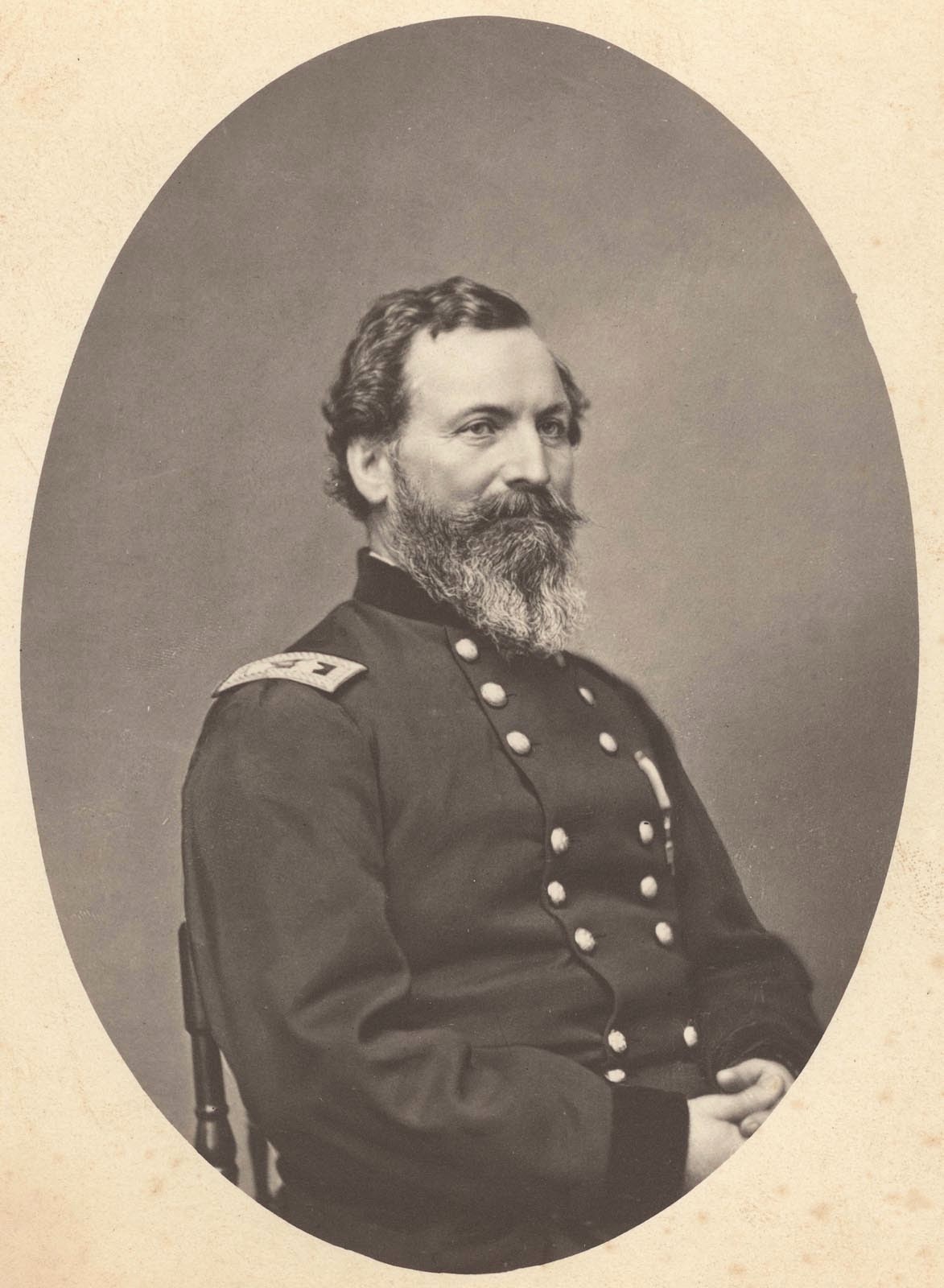
Civil War portrait of Major General Sedgwick.


Major General John Sedgwick was buried at Cornwall Hollow on May 15, 1864. Newspaper accounts estimated that about 3,000 people attended (the entire town’s population was less than 2,000). The family rejected the Connecticut General Assembly’s plan to have his remains lie in state in the Capitol at Hartford, and instead held a simple, modest ceremony at Cornwall Hollow.

On the Sunday after he fell, borne by his neighbours, amid the tears of silent thousands, and wrapped in the flag, he was buried in Cornwall Hollow. No military salute was fired above his grave, but one solitary peal of distant thunder sublimely suggested the soldier’s life and death. Sedgwick died, but the victory was won.
~ George William Curtis, Oration delivered at the dedication of the statue to Major-General John Sedgwick, at West Point, October 21, 1868 

On Memorial Day in 1892, veterans gathered at Sedgwick’s grave for a special commemoration. An estimated 2,000 people attended the service, which began with a parade to the Cornwall Hollow Cemetery from West Cornwall. Next, members of the VI Corps decorated Sedgwick’s grave, adding their emblem to his obelisk. The other soldiers’ graves in the cemetery were decorated next, followed by a luncheon under a massive tent, and afternoon speeches about Sedgwick.

Graveside service for Sedgwick, Cornwall Hollow Cemetery, 1892.

Sedgwick’s death was so deeply felt that the officers and men who knew him continued to gather for commemorations for more than half a century. The first statue of Sedgwick was erected at his alma mater, the U.S. Military Academy at West Point, in 1868.

Sedgwick state at West Point in 2014.


A monument to Sedgwick's memory was placed at Spotsylvania Courthouse by the members of the VI Corps in 1887.

Sedgwick Memorial erected by the VI Army Corps at Spotsylvania Courthouse, VA.

The Sedgwick Memorial at Cornwall Hollow was dedicated on May 30, 1900. The ceremony was attended by an estimated 3,000 people. Cornwall’s residents helped pay for the monument, which was also funded by subscription from people throughout Connecticut. The monument includes a howitzer used by his command during the Mexican War.

Sedgwick Memorial, Route 43, Cornwall, CT.
The original cannonballs on the monument were destroyed during a World War II scrap metal drive. In 1989, vandals stole three of the monument’s bronze plaques and damaged a fourth. New plaques, based on photographs, were made by Cornwall resident Neil Estern. The monument was restored and rededicated in 1994. Honorary wreath bearers for the rededication were Harriet Clark and Bessie Blake, who attended the original dedication in 1900.


An equestrian statue of Sedgwick was erected by the State of Connecticut at Gettysburg in 1913. The horse was modeled after a photograph of “Handsome Joe,” Sedgwick’s horse, and the sword was a copy of the one he wore into battle (now in the collection of The Connecticut Historical Society).

Sedgwick equestrian statue at Gettysburg.

Most recently, in 1929, a statue of Sedgwick was added to the Capitol building in Hartford.

Sedgwick statue on the Capitol building at Hartford, CT.

Monday, August 11, 2014

Joseph and William Payne

Brothers Joseph Benjamin and William Rufus Payne both served during the Civil War. In 1860, the two brothers were living with their father, Rufus Payne, who was a hotel keeper, their mother, Mary (Calhoun) Payne, and their sisters, Mary and Charlotte.

William R. Payne, carte-de-visite in an album
kept by his sister Charlotte "Lottie" Payne.
Collection of Cornwall Historical Society.

William Payne (1832-1865) was working as a house painter when the Civil War started. He enlisted with Company I, 11th Connecticut Volunteer Infantry as a 1st Sergeant on October 16, 1861. William was promoted to 2nd Lieutenant on June 2, 1862 and served a three year term, mustering out on October 21, 1864. He returned home to Cornwall, suffering from a disease contracted during his service. William Payne died at home from that disease on February 20, 1865. He was buried in the Cornwall Cemetery on Cemetery Hill Road (now Route 4).


Joseph B. Payne, carte-de-visite in an album
kept by his sister Charlotte "Lottie" Payne.
Collection of Cornwall Historical Society.


Joseph Payne (1841-1864) enlisted with Company G, Second Regiment Connecticut Volunteers Heavy Artillery as a Corporal on August 4, 1862. He was promoted to Sergeant on January 1, 1864 and to Quarter Master Sergeant on February 13, 1864. Joseph was killed at the Battle of Cold Harbor on June 1, 1864. He was buried on the battlefield, now at the Cold Harbor National Cemetery.


One of several Civil War letters written by Joseph Payne,
now in the Collection of the Cornwall Historical Society.

During the war, Joseph wrote frequently to his sister Charlotte “Lottie” Payne back home in Cornwall. In a letter written at Headquarters Camp near Alexandria on October 6, 1862, Payne wrote “The boys from Cornwall are all well.” He also discussed a box of food and other items from home that Charlotte was preparing to send him, requesting pie and encouraging her to send a “good sized box for it don’t cost much more than a small one.”

Fearing the worst for himself, Payne prepared a final letter to be sent to his sister in the event of his death. The letter, now in the collection of the Cornwall Historical Society, consisted primarily of a poem intended to console Lottie as she grieved for the loss of her brother. A transcript of the letter is as follows:


Sister Lottie
Do not be at your wit’s end wondering who this comes from, but receive it as the words of your now Sainted brother,
Joseph
From one who loves thee with thoughts to dear to tell, let us recognize each other in heaven.

To Lottie
O, think of me not as afar, when you meet
  Where the oft bereft circle sits closer around,
Look not with despondence on one vacant seat,
  Nor think of me there as beneath the cold ground
From my home in the mansions of Glory above
  I may visit you often in those circles of love.

O, think of me not as afar when you bend
  And united by offer the incense of prayer,
It ascends to my home and my spirit may lend
  The gladning of its love to present it when there,
Or may holier around you unseen & impart
  Some promptings of love to each supplicant heart.

O, think of me not as afar when you bow
  In the temple to worship [..] father & God
In the place where I praise him no tears ever flow
  There is naught to remind of his chastening rod
My spirit may meet the resigned heart & raise
  In responses more full, the glad anthems of praise.

O, think of me not as afar, when alone
  You muse over the past & recall each glad voice
When the visions of earth, the most brightly have shone
  And by sorrow untaught, you have dared to rejoice
O, how near would I then be to whisper of joy
  Which the arrow of death can never destroy.

O, think of me not as afar in that house
  When in secret you as for the blessing of peace
If in sadness, my savior may send me to pour
  The sweet balm he bestows on the spirit forgiven
And as comfort flows in o’er your grief wounded soul
  Let no murmur, of sorrow the soft tide control.

O, think of me not as afar off whenever
  Sweet cheerfulness, visits the shrine of your heart
The smile of that happiness, never, no, never
  Would my spirit ever lessen or bid to depart
I would be still remembered, but not with the tomb
  Should the thoughts of the happy be blended with gloom..

O, think of me not, as afar off when meeting
  The absent returned, or the friends frequent call
I would add to the hearts cheerful greeting
  And on missions of mercy, would fain bless you all
Then check not one joy, that religion approves
  But smiles through the tears that remembrances still move.

O, think of me not, as afar off or lonely,
  Here are myriads of happy ones chanting their songs
And remember, remember that here & here only
  True happiness, pure & immortal belongs
The ransomed[?] from earth are raising their voices
  As the music of Angels my spirit rejoices.

Disaster at Cold Harbor: Sunday


The Cornwall Historical Society will present a special talk by S. Waite Rawls III, Co-CEO of The American Civil War Museum and part-time Cornwall resident, on Sunday, August 17, at 2 p.m. at the Cornwall Town Hall, 26 Pine Street, Cornwall, CT.

Rawls will discuss the Battle of Cold Harbor, one of the most devastating battles for Cornwall’s troops during the Civil War. The talk will be illustrated by slides. The program is being held in conjunction with the Cornwall Historical Society’s current exhibit, Cornwall and the Civil War.

The Battle of Cold Harbor began on May 31, 1864 and continued until June 12. Approximately 170,000 Union and Confederate troops fought in the battle, which included nine days of trench warfare. By the end, nearly 13,000 Union troops and nearly 5,000 Confederate troops were either killed, wounded, missing, or captured. One soldier from Cornwall was killed during the Battle of Cold Harbor, while another ten soldiers from Cornwall were seriously wounded; two died from their wounds weeks later. Approximately 200 Cornwall men served during the war, 10% of the town’s population.

Waite Rawls is a native Virginian and has been a Civil War buff all of his life. He graduated from the Virginia Military Institute, served in the U. S. Army, and got his M.B.A. and J.D. degrees from the University of Virginia.

Waite and his wife Malou, moved to New York in 1975, where he began his career in commercial and investment banking, at Chemical Bank in New York before moving to Chicago with Continental Bank. A pioneer in the world of derivatives and securitization, he longed for a change and moved to Richmond, Virginia, in 2004, to become the President of the Museum of the Confederacy, the country’s oldest and largest Civil War museum which includes the White House of the Confederacy, Jefferson Davis’ home and office during the War. It has recently combined with the American Civil War Center, to become The American Civil War Museum, the premier destination for those interested in learning more about the Civil War and its legacies. Waite has served on many charitable and corporate boards in New York, Chicago, Florida, and Virginia.

Waite and Malou have been weekenders in Cornwall since 1984, and their house and farm on Popple Swamp Road  is one of the area’s landmarks. The barn received a “Barn Again” award from the National Trust for Historic Preservation in 1990 for its restoration to a working barn (Debra Tyler’s “Local Farm”), and the Joshua Pierce Farmstead was listed on the Connecticut Register of Historic Places just last year. His “new” house in Richmond (1860) is almost as close to the Cold Harbor battlefield as his Cornwall house is to John Sedgwick’s grave on Cornwall Hollow Road.

The Cornwall and the Civil War exhibit and related programs are supported by grants from Connecticut Humanities, Mohawk Mountain Ski Area, National Iron Bank, and Torrington Savings Bank.

Wednesday, August 6, 2014

Intern Update: Janet Payne

Our intern, Ryan Bachman, has been spending the summer transferring our historic documents to archival folders and boxes, improving their storage and making them more accessible for research. This is the fourth in a series of blog posts he is writing about some of the interesting or surprising documents he finds in our vault.

This week, I worked on sorting the papers of Emily E. Marsh. Ms. Marsh was a lifelong resident of Cornwall who ironically lived in the building that currently houses the historical society. She was perhaps best known for her job as a librarian, which she held for over forty years. As Cornwall librarian, Ms. Marsh received hundreds of letters from genealogy enthusiasts interested in their Cornwall roots, and over the course of her life, she collected countless items associated with Cornwall families, and town history in general. One item I uncovered this week that really stands out is a book of artwork and poetry made by twenty year old Cornwall resident Janet E. Payne in 1838. The images call to mind the artwork found in the friendship album made for Cherry Stone in 1824 by Wu Lan, a student of the Foreign Mission School. It’s interesting to speculate what influences or connections there may be between these two volumes.


Friday, August 1, 2014

Intern Update: James Douglas "Panic Room"

Our intern, Ryan Bachman, has been spending the summer transferring our historic documents to archival folders and boxes, improving their storage and making them more accessible for research. This is the third in a series of blog posts he is writing about some of the interesting or surprising documents he finds in our vault. 

The second part of the anonymously written biography of James Douglas dealt with life on the early Cornwall frontier. After the Douglas family, and their livestock, safely made it through the winter of 1739-1740, they began to farm their property on Cream Hill. However, according to Douglas’ biographer, fear of Native peoples played a large role in the lives of the early Cornwall settlers. For example, while Douglas and his sons worked in their fields, his daughters would be, to quote the biographer, “placed on some commanding position to act as sentinels and give the alarm should the Indians attempt to surprise them.”

A fort was constructed near the center of the settlement, and according to the Douglas biography, it was town policy in the early days for townspeople to meet at the fort nightly and sleep within the safety of the palisade walls. Unfortunately, this meant that every evening many residents had to trek, “on foot paths through the woods a distance, in some instances, of several miles.” Living on Cream Hill, Douglas became wary of his family having to constantly travel through the forest to the safety of the town fort. During his first winter in Cornwall, Douglas had proven himself to be an expert problem-solver, and he soon set to work figuring out a way to save his family the danger of having to journey away from their farm every night.

What the Scottish schoolteacher came up with was an eighteenth century version of a panic room. Douglas constructed a building that was just big enough to fit his family into, and then built a haystack on top of it. Every night, the Douglas family would file out of their home and climb through a secret door into their sleeping quarters in the haystack. In this way, Douglas saved his family the trouble of walking back and forth to the fort, and provided them with a safe place to spend the night; although it’s important to note that there was never any recorded violence between settlers and Native people in Cornwall. In the image below, the Douglas farm is shown on a map near Cream Hill Lake sketched in 1763 by future-Yale President Ezra Stiles.

Saturday, July 26, 2014

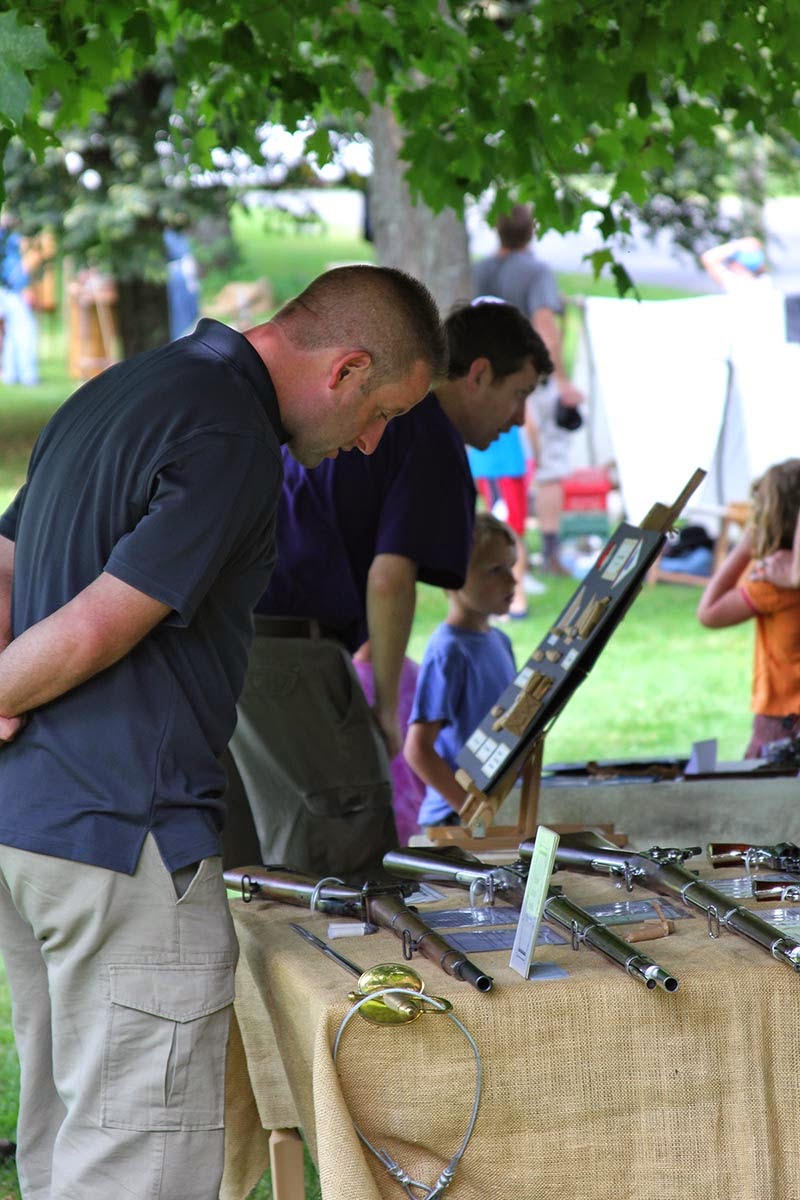
Family Day Photos: The Civil War Experience

Our thanks to Company F, 14th Connecticut Volunteer Infantry, for putting together a fantastic program, and to the Town of Cornwall for letting us use the Green. We estimated at least 80 people attended the event throughout the course of the day, coming from near and as far as Manchester and Old Saybrook. Everyone had a great time, fully engaged with history, learning about different aspects of the Civil War experience.

Here are some photos of the day's activities, from military demonstrations to camp cooking and medical presentations to a game of 19th-century baseball.


Thursday, July 24, 2014

Intern Update: A Visit to Alabama in 1851

Our intern, Ryan Bachman, has been spending the summer transferring our historic documents to archival folders and boxes, improving their storage and making them more accessible for research. This is the second in a series of blog posts he is writing about some of the interesting or surprising documents he finds in our vault.

This week, I originally planned to continue writing about the biography of James Douglas. However, in keeping with the Civil War exhibit, I recently found an interesting letter from 1851 written by a Connecticut traveler who journeyed from the Nutmeg State to Alabama. The letter was written to a woman named Jane, and sent by someone known only as “your friend”, who was originally from Hartford. The mysterious letter gives insight into the views of a Northerner on life in the Southern states in the years prior to the Civil War.

According to the letter’s author, the trip began with a train ride from Hartford to New York City, where the traveler met up with a man known as “Mr. Savage.” After cross-checking with census records, “Mr. Savage” appears to have been Henry Jamin Savage, a Connecticut-native who removed to Wilcox County, Alabama where he worked as a successful businessman. Savage would later serve in the Third Alabama Cavalry and the Fourth Alabama Volunteer Militia during the Civil War. The traveler toured New York City for several days, taking in the sights and seeing a play, before continuing on to Washington, D.C., by way of rail through Philadelphia and Baltimore. When they reached the nation’s capital, the traveler related that Savage took them on a detour to Richmond. According to the traveler, one the pair reached the city:
“…he stopped to buy slaves; I had a very pleasant time there and went all round the city. It don’t look much like I thought it did. It looks as black as the Negroes that live there. More than half of the people are black that live there. There was an auction the day I was there, they sold 300 Negroes. They was put aboard the cars to the South, they looked like a drove of sheep...” 
 In the margins next to this anecdote, the traveler scrawled, “Don’t let anybody see this but you. Burn it up.” Even though the letter’s author treated the slave auction in a somewhat casual manner, this note suggests that at the same time, they were worried about the knowledge of Savage’s purchase of slaves being known in Connecticut. The people purchased at the auction were evidently put on trains and sent to plantations in the Deep South, which is where Savage and the traveler continued on to, as well. From Richmond, the two Connecticut-natives traveled back to the coast, and made their way through the Carolinas to Georgia, and then overland to Wilcox County, Alabama. Once at the Savage home, the traveler related to their friend Jane their observations on life in the rural South:
“I like the people very much, they are all so kind. I can’t help it, but they are so different from the North. I don’t know how to act. They shake hands when they meet and when they part, they can’t talk a bit like me—they laugh to hear me talk and I laugh to hear them. They never say “I guess”, but say “I reckoned so”, and “a heap of folks”, “that mighty good”; all of these words, they are as common as dirt and sound very queer to me. They live on sweet potatoes, cornbread, and chickens all the time. They don’t have any pies and cake, they don’t know how to make them. Their bread is nothing; cornmeal and hot water and a little suet, put it on a board and set it in the ashes to bake. I have plenty of buttermilk, and I am as fat as a pig.” 
This letter, written ten years before the start of the Civil War, gives a great deal of information about national attitudes in the antebellum United States. One clue as to the writer’s identity may be found in the 1860 US Census—at that time, there was a man from Connecticut named Fred Hickox living in the Savage household. Hickox later went on to serve in the Third Alabama Cavalry alongside his fellow Nutmegger Henry Jamin Savage.